Looking for an IOSH or NEBOSH course? Browse our 2026 courses here.


Lithium-Ion Battery Fires and the Emergence of “Class L”: What Building Owners and Managing Agents Need to Know
NEWS
February 2026
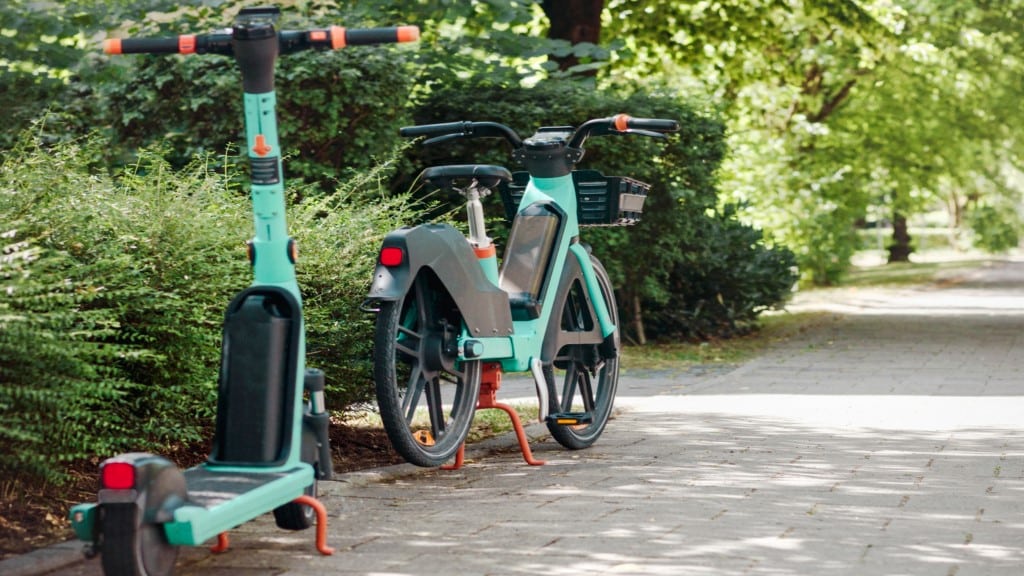
Lithium-ion batteries are now part of everyday life in buildings; powering e-bikes and e-scooters, workplace equipment, mobility aids, warehouse vehicles and backup power systems. As their use has grown, so too has the number of fires driven not by traditional ignition sources, but by battery failure itself.
In response, international standards have begun to evolve. ISO 3941:2026 introduces a new fire classification "Class L" to describe fires involving lithium-ion batteries. While this does not create new legal duties in the UK, it marks an important shift in how these risks are understood and how good practice is likely to develop.
At Ligtas, we see this as a confirmation of what responsible duty-holders are already recognising: lithium-ion risks need to be managed deliberately, not tolerated by default.
What is “Class L” and why does it matter?
Traditional fire classifications are based on the type of fuel burning; wood, liquids, gases or metals. Lithium-ion batteries behave differently.
When a lithium-ion battery fails, it can enter thermal runaway, leading to:
- rapid and often violent fire development,
- the release of dense, toxic smoke,
- fire spread to adjacent batteries or combustibles,
- and the potential for re-ignition after apparent extinguishment.
Class L exists to recognise that these fires are driven by the battery itself, not simply by surrounding materials, and that they often overwhelm spaces faster than many conventional fires.
What this means for duty-holders
Fire risk assessments, policies and management arrangements that do not explicitly consider battery-driven fires may no longer reflect emerging best practice.
Ligtas can support you with targeted reviews of existing fire risk assessments to ensure lithium-ion risks are being identified, evaluated and managed proportionately across your portfolio.
Does Class L change the law in the UK?
No. The adoption of ISO 3941 as a British Standard does not introduce new statutory obligations.
However, standards influence:
- what enforcing authorities consider reasonable and proportionate,
- how insurers assess and price risk,
- how competent professionals benchmark good practice.
In practical terms, Class L reinforces existing UK expectations; particularly around protecting escape routes and managing charging activities safely.
Why this matters now
Enforcement action and insurance scrutiny increasingly focus on lithium-ion risks. Organisations that can demonstrate a considered, up-to-date approach are far better placed than those relying on outdated assumptions.
Ligtas helps clients understand where expectations are heading and how to respond without unnecessary disruption or cost.
Why electrically powered personal vehicles (EPPVs) are a focus
Across residential and mixed-use buildings, the most common lithium-ion risks are electrically powered personal vehicles, such as e-bikes and e-scooters.
They are:
- widely owned,
- frequently brought into common areas,
- often charged informally,
- sometimes modified or fitted with incompatible chargers.
For these reasons, EPPVs are now a consistent focus of fire and rescue service attention. They are not singled out because they are the only lithium-ion risk, but because they are currently the most widespread and visible one.
Managing EPPVs effectively
Clear policies, appropriate charging arrangements and firm protection of escape routes are now essential.
Ligtas supports clients with practical, enforceable EPPV storage and charging policies for both residential and commercial buildings, aligned with current enforcement expectations and resident or tenant realities.
Lithium-ion risks go beyond personal devices
While EPPVs are common, Class L applies equally to other battery-powered systems, including:
- mobility scooters and powered wheelchairs,
- electric forklift trucks and pallet trucks,
- warehouse charging areas,
- UPS and backup power systems,
- battery storage, repair or recycling operations.
Larger battery systems introduce higher energy loads and often involve indoor, high-current charging—requiring a higher level of control.
For workplaces and industrial settings
Battery charging and storage arrangements increasingly attract insurer and regulator attention.
Ligtas provides specialist advice on lithium-ion risks in workplaces, including logistics, retail and industrial environments, helping organisations balance operational needs with fire safety and compliance.
A common misconception: “Class L extinguishers”
One area of confusion is the belief that new fire classifications automatically mean new types of fire extinguishers.
At present:
- There is no such thing as a Class L or Type-L fire extinguisher in the UK or EU.
- Existing standards (EN 3 and BS 5306-8) do not include lithium-ion battery fire test criteria.
- Claims that extinguishers are “Class L rated” are marketing descriptions, not recognised classifications.
This matters because lithium-ion battery fires cannot be managed simply by adding extinguishers. In many scenarios, evacuation, not firefighting is the safest response.
Getting this wrong carries risk
Over-reliance on extinguishers can create false reassurance and undermine evacuation strategies.
Ligtas helps clients develop fire strategies that prioritise prevention, separation, detection and safe evacuation rather than relying on inappropriate firefighting measures.
What good practice looks like today
Although standards continue to evolve, good practice is already well established:
- Keep battery storage and charging off escape routes
- Control charging deliberately, not informally
- Be cautious with modifications and third-party equipment
- Recognise that scale matters—larger systems require stronger controls
- Plan for realistic emergency response, prioritising early evacuation
These principles already underpin UK fire safety guidance and align closely with the intent of Class L.
Looking ahead
As UK and European standards align further with the ISO framework, we expect:
- clearer language around lithium-ion risks,
- greater scrutiny of charging and storage arrangements,
- increased insurer focus on governance and documentation,
- eventual updates to product and extinguisher standards.
Organisations that act now will be better placed than those waiting for formal regulation to catch up.
Our view at Ligtas
Class L does not signal a sudden change in the rules.
It confirms a simple reality:
Lithium-ion batteries introduce a different kind of fire risk and they need to be managed intentionally, not by default.
At Ligtas, we help clients understand these risks calmly, proportionately and defensibly—whether that involves EPPVs in residential blocks, battery charging in workplaces, or emerging technologies across a wider estate.
If you would like to discuss how lithium-ion battery risks are being managed across your buildings, or whether your current arrangements reflect emerging best practice, our team would be happy to help.
Explore more from Ligtas
Webinar
Webinar Replay
Catch up with our Unlock Residential Fire Compliance - The Practical Guide to the Fire Safety Regulations 2025 webinar.

Webinar
Webinar Replay - Part 2
Catch up with our Unlock Residential Fire Compliance - Part 2: Residential PEEPs – Guidance for Responsible Persons.

Insights
FAQs Page
How do we make this work in the real world? Your top questions answered.